
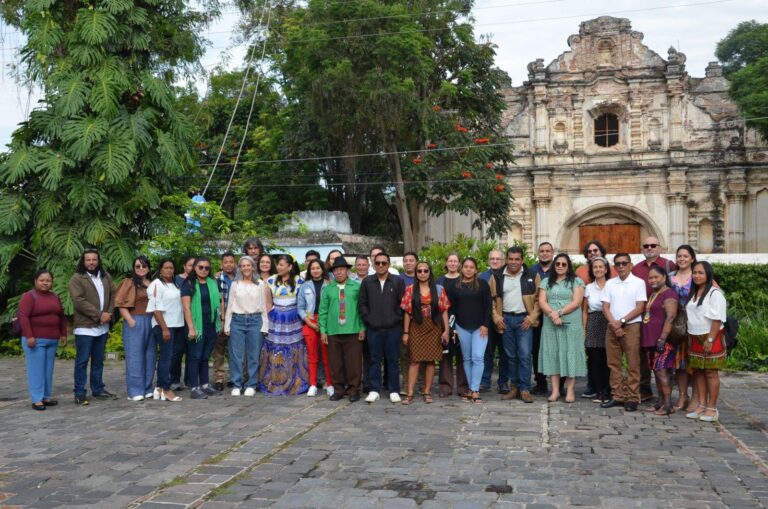
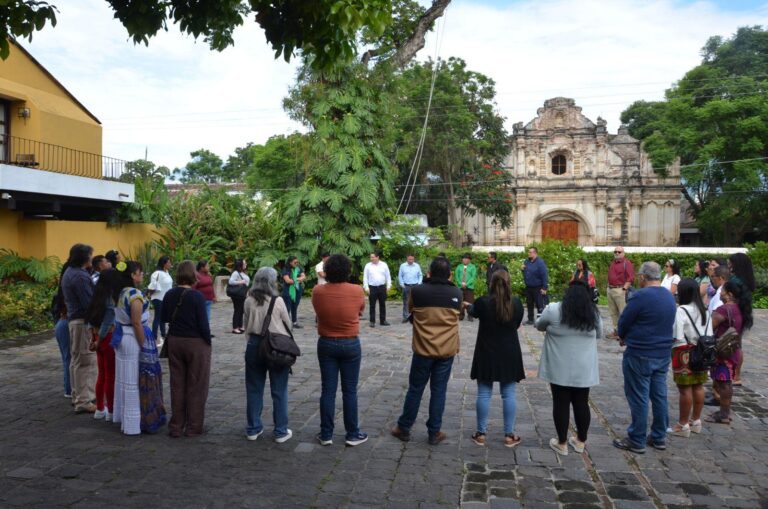
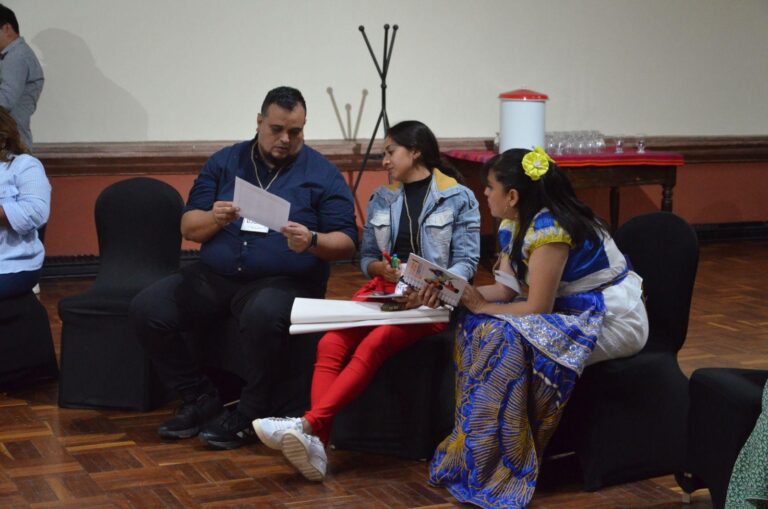
From July 7 to 9, 2025, leaders from across Mesoamerica gathered in Antigua, Guatemala, for a space of collective reflection, shared learning, and future visioning.
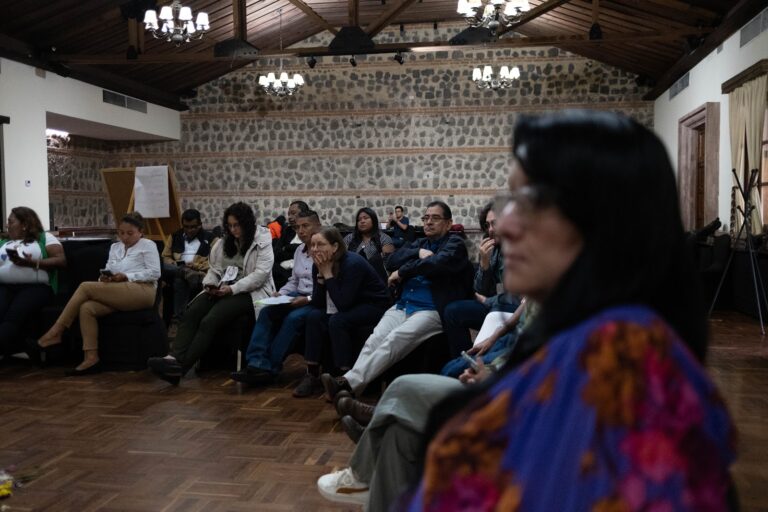
The Regional Exchange Workshop, “Weaving Knowledge and Lessons from the Mesoamerican Territory”, brought together over 40 participants, including grassroots representatives, women leaders, youth, technical advisors, and members of the Boards of Directors of the Mesoamerican Alliance of Peoples and Forests (AMPB), CLARIFI, and Utz Che’.
In a regional context marked by shared challenges—such as extractivism, the climate crisis, the criminalization of land defenders, and state barriers to community development—the workshop emerged as a space of resistance. Through a methodology rooted in Indigenous worldviews and collective creativity, participants interwove experiences and lessons.
A Gathering of Territories and Voices
The opening day, themed “Weaving Living Memory”, began with a spiritual and symbolic moment. Honoring the Mayan calendar, participants invoked the energy of the day (Nahual Imox) to celebrate community, wisdom, and connection with ancestors.
In a circle surrounded by flowers, music, and sacred symbols, participants set an intentional tone that reaffirmed spirituality as an integral part of activism. Each person introduced themselves by sharing their name, organization, and a personal value—highlighting the strength of diversity: seven countries, over 15 organizations, women, Indigenous peoples, and youth.
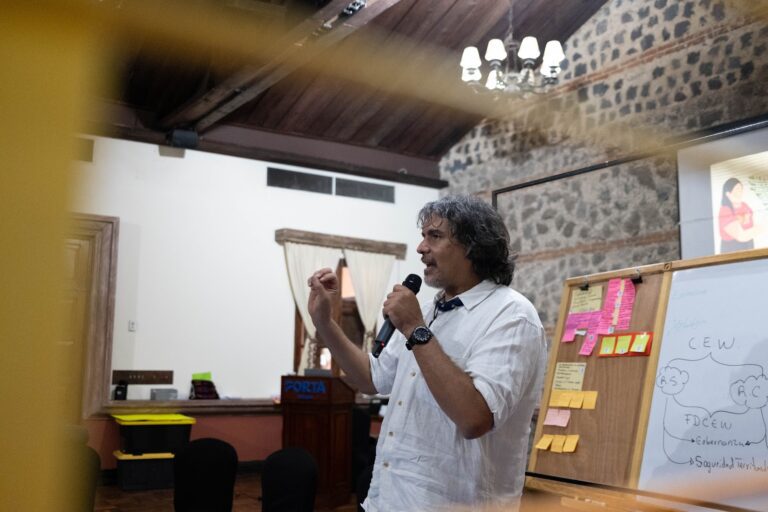
Political reflections from AMPB, FTM, Utz Che’, and CLARIFI opened an exchange on regional struggles and achievements. Gustavo Sánchez Valle, AMPB board member and part of CLARIFI’s Steering Committee, summed up the spirit of the gathering:
“In this workshop we have exchanged experiences and lessons learned—both positive and challenging—among the different organizations and initiatives supported in six countries that are part of the Mesoamerican Alliance of Peoples and Forests. We heard from Guatemala, Mexico, Honduras, Costa Rica, Panama, and Nicaragua about what this support has meant in terms of governance, strengthening Indigenous and community economies, and conservation. We take the best of each of these cases to incorporate into our own future work.”
His words reflected the value of mutual learning and the importance of seeing local work within a broader regional framework.
Mapping Territories and Goals
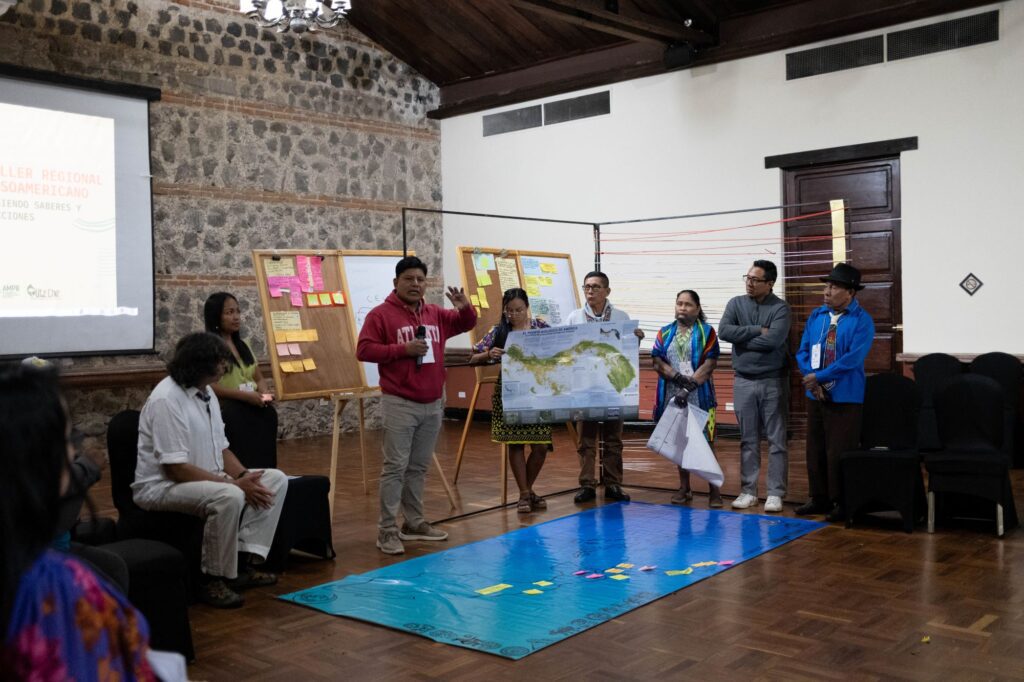
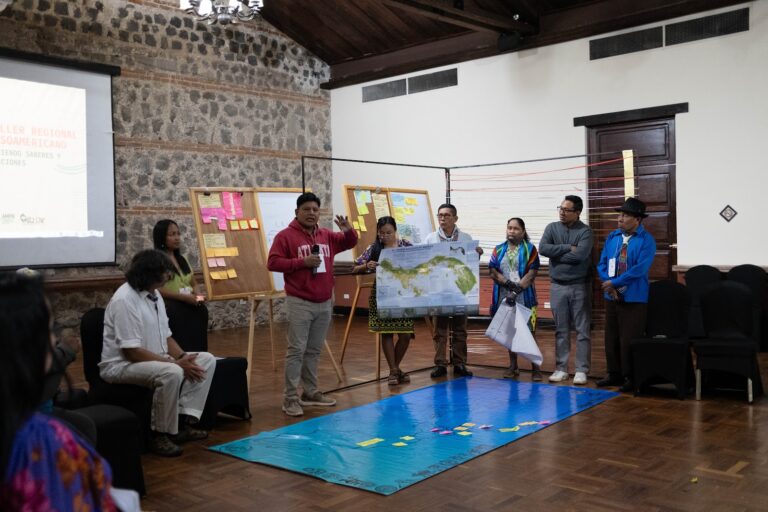
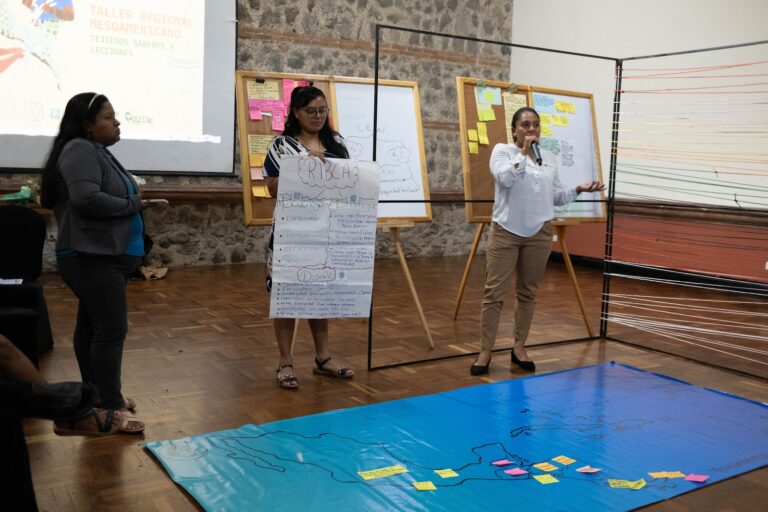
One of the highlights of the first day was the “Mesoamerican Map” exercise. Using a large map on the floor, each organization shared their territorial work, marking objectives, challenges, and the communities they serve. With colored cards, symbols, and words, a collective map emerged, revealing shared priorities such as agroecology, ancestral knowledge, women’s leadership, education, and water protection.
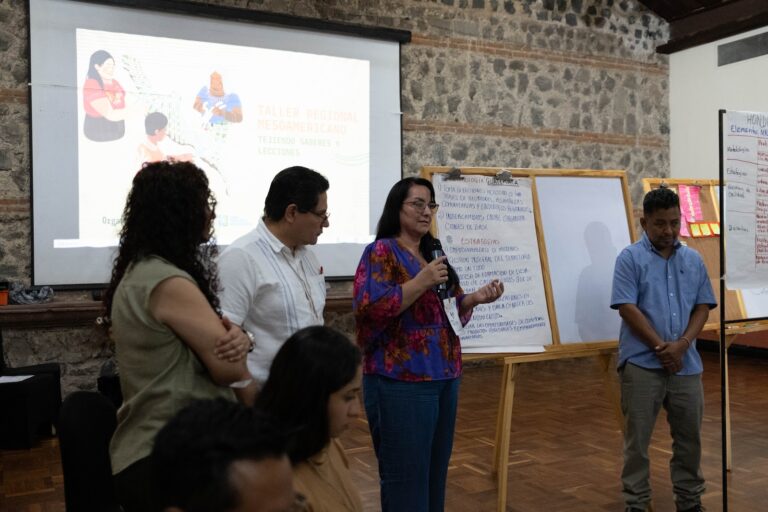
On the second day—“Charting Paths from the Heart of the Territory”—participants deepened their analysis through critical mapping by country. Using creative methods, each group explored their context, objectives, strategies, methodologies, governance structures, challenges, impacts, and lessons learned.
Discussions brought to light external pressures such as land dispossession, extractive industries, and structural racism, as well as internal challenges like leadership fatigue, resource scarcity, and generational gaps.
A Collective Mesoamerican Future
The day concluded with a symbolic and strategic exercise: “Weaving the Mesoamerican Dream”. A large fabric map of the region was connected to an open loom, where participants wrote proposals on colored ribbons and wove them together.
The resulting tapestry captured shared aspirations:
- Strengthened community organizations with governance, accountability, and transparency.
- Sovereign food systems and community economies rooted in ancestral knowledge and ecological cycles.
- Territorial defense through legal empowerment and youth-led advocacy.
- Environmental restoration, including forest protection, water stewardship, and healthy soils.
- Revitalization of ancestral wisdom, affirming Indigenous knowledge as the foundation of sustainability.
- Self-governance with inclusive, gender-equitable decision-making.
- Territorial education positioning women and youth as drivers of change.
Visit to Unión Huista
The final day took place in the community of La Trinidad, Unión Huista, where participants experienced the principles discussed in the workshop firsthand.
Under the shade of the ceiba tree, community leaders welcomed the group with stories of displacement and resilience following forced relocation due to the threat of volcanic eruption.
A community-painted mural recounted loss, struggle, and perseverance. Women guided visitors through aquaculture and agricultural initiatives that have strengthened food sovereignty, economic autonomy, and environmental care.
The visit ended with a communal meal prepared with local products—a fitting close to three days of weaving knowledge, building solidarity, and envisioning the Mesoamerican future.