
Women and the land
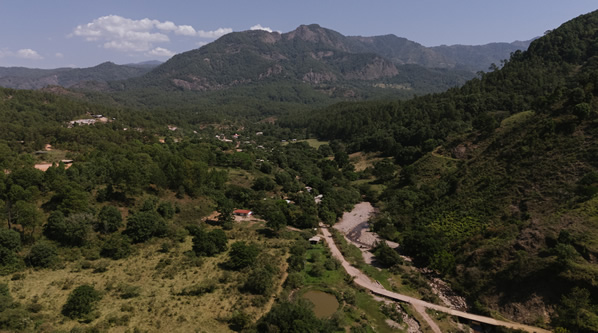
The Sierra is divided into numerous ejidos: autonomous territories where decisions are made in assemblies and land rights are collective. No one can act on their own; everything is agreed upon by the community, including land use and forest resource management.
The people who live in the ejidos dedicate much of their work to community forest management, which involves harvesting timber, transporting it, and processing it in sawmills.
In many of these ejidos, groups of women, often accompanied by their families — work collectively on reforestation projects and family gardens. These ejidos are part of the General Hermenegildo Galeana Union of Forestry and Agricultural Ejidos, created more than 40 years ago in response to an injustice: companies were extracting timber from communal forests without consulting the communities who lived in and cared for those territories. To stop this exploitation and make their voices heard, several ejidos organized and founded the Union.
The Union is part of the Mexican Network of Peasant Forestry Organizations (Red Mocaf), and through this network, women from different ejidos now receive support to strengthen their work. One example is the $30,000 grant provided by the Mesoamerican Territorial Fund (FTM) to help develop reforestation projects, home gardens, and the formation of organized women’s groups.
A key pillar promoted by the FTM is direct financing with a gender perspective, which promotes women’s economic independence and empowers them to carry out their projects.
“Here in the mountains, women were definitely not taken into account at all. And now, thank God, we are taken into account for many things. I feel that women now also have the right to give our opinion and to say yes or no to what we are told,” says Eloína Rentería, a resident of the El Moreno ejido
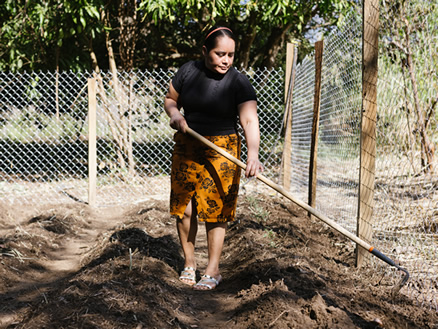
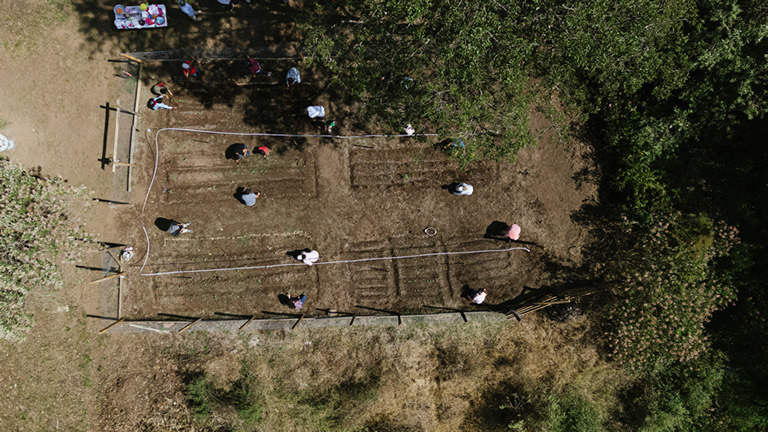
With this funding, women plant trees in the mountains and vegetables in community gardens near their homes. Araceli Díaz is part of the women’s group in the Bajos del Balsamar ejido. She worked in the community garden where they planted native seeds like cabbages, squash, radishes, chilies, tomatoes, and more.
“For us, these projects mean the livelihood of our homes, because we live very far from the municipal center, where we get all our products,” says Araceli.
With the funds, they bought fencing, wheelbarrows, sprinklers, hoses, staples, hammers, and shovels. The construction of the garden was a collective effort that also involved their husbands, sons, daughters, and students from the community.
“Being part of Red Mocaf is valuable because they manage international projects, and that allows us as women to benefit,” Araceli adds.
Challenges in the Ejidos
Several kilometers from Bajos del Balsamar is the ejido of El Moreno. Getting there means traveling dusty roads, marked by ravines and damaged by hurricanes that sometimes leave communities isolated for days.
That is not the only challenge. Over the past eight years, federal government budget cuts have jeopardized the sustainability of many organizations. Despite this, the Union of Ejidos has managed to remain active thanks to its community organization model.
José Domínguez, a fire brigade member, explains that funding for community projects is vital because they cannot rely solely on forest use.
“It’s not mandatory to harvest timber, but we do it on a small scale to cover the forest’s own needs, such as financing the fire department or surveillance. It’s not possible to sustain an ejido only with what the forest provides; external support is needed,” he says.

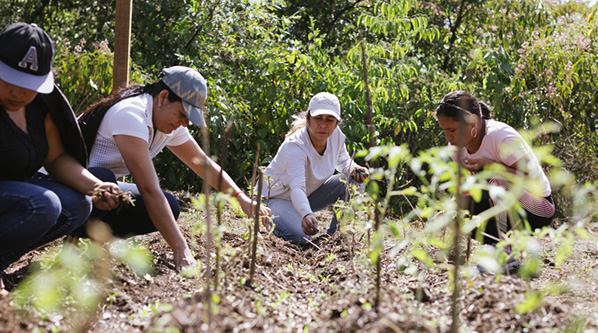
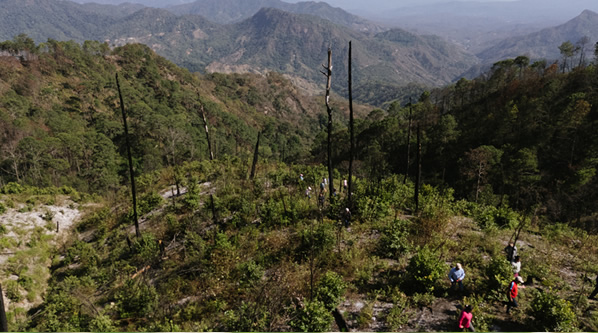
In the ejido of El Moreno, Tamara Hernández, together with a group of women from the community, planted half a hectare with different species of trees, such as quebraché, campicirán, cacahuananche, oak, tamarind, and mahogany. In total, thanks to the project supported by the FTM, 30 hectares were reforested. But with resources from the ejidos themselves and other local programs, they managed to plant 80 hectares that same year in eleven different ejidos.
On reforestation day, Tamara remembers taking her children to see “what it means to plant a life.” But she also remembers feeling important for breaking a barrier.
“It was like a goal I achieved in my life, because normally that work is done by men. Women had never done it before, neither me as a woman nor my little girl as a baby. I felt good because I felt like a very important person, because I had never worked before. Thank God they gave me this opportunity to feel what it means to contribute something, in a community, in the countryside,” says Tamara.
Projects and programs that seek to include and effectively amplify the voices of women and young people like Tamara, Joaquín, or Araceli undoubtedly generate an impact that goes much further, transforming entire communities.
“Including young people and women creates a new way of thinking in the community. This is very beneficial for us because it has given us a different type of organization; even the social fabric has changed: women now participate in meetings and are considered for positions such as commissioner. This is very important, it helps us and strengthens us as a community,” says Antonio Arriola, from the Bajos del Balsamar ejido.